
Aqaba Coral Reefs: Why They Matter and the Responsible-Diving Code
Marine Conservation
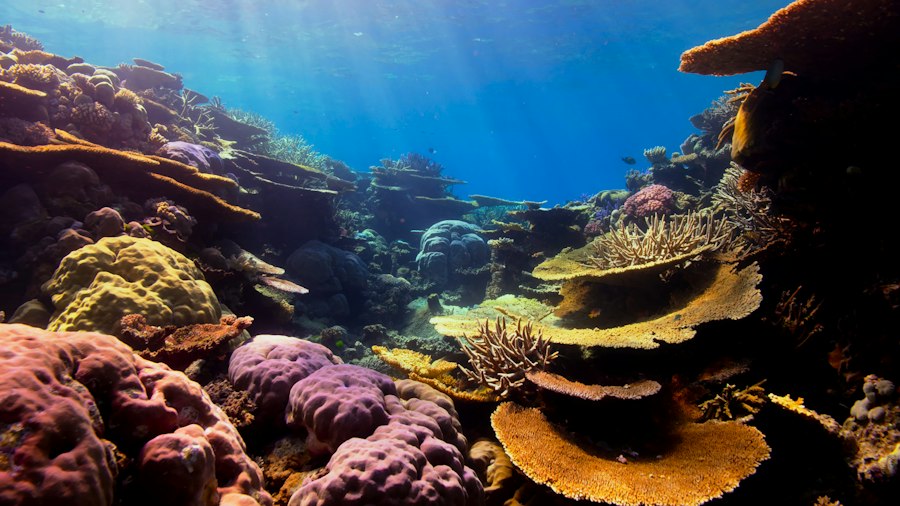
The Aqaba coral reefs are the reason most divers come to Jordan. Along this short stretch of Red Sea coast, fringing reefs grow within a few fin kicks of the beach and then drop steeply into the deep, clear water of the Gulf of Aqaba, so even a shore dive puts you over living coral within minutes. This guide explains why these reefs are special, what research suggests about their resilience, the threats they face, and the ten-point responsible-diving code that Aqaba Dive Academy briefs before every dive so you leave the reef exactly as you found it.
In this guide:
- Why the reefs of the Gulf of Aqaba are special
- What research suggests about their heat tolerance
- The main threats to coral in Aqaba
- A 10-point responsible-diving code
- Why buoyancy is the number-one conservation skill
- How to choose an eco-conscious dive operator
Why Aqaba coral reefs matter
Jordan's coastline is only about 27 km long, yet fringing coral reef runs along most of it, and the richest section is protected inside the Aqaba Marine Reserve. Surveys there have recorded around 157 species of hard coral and about 500 fish species, a remarkable count for such a small area. Sea turtles, moray eels, lionfish, garden eels, nudibranchs and dense clouds of anthias all depend on this reef.
Geology explains why the diving is so easy. The Gulf of Aqaba sits at the southern end of the Dead Sea Transform fault, so the seabed falls away steeply close to shore. Reef flat, drop-off and deep water are compressed into a short distance, which is why sites such as the Japanese Garden and King Abdullah Reef can be dived from the beach at any level. The gulf is sheltered too: little swell, usually mild or no current, visibility commonly 15–40 m, and water between about 21 °C in winter and 27 °C in summer.
The reef is also the foundation of Aqaba's dive tourism and of the research carried out at the reserve's Marine Science Station. Every diver who visits has a share in keeping it healthy.
A coral refuge? What research suggests about heat tolerance
Corals in the northern Red Sea and the Gulf of Aqaba are widely studied because they appear to tolerate higher water temperatures than corals elsewhere. During heat-stress events that bleached reefs in other seas, the reefs here largely kept their color, and research suggests the Gulf of Aqaba could act as a refuge for corals as the climate warms.
That is encouraging, not a guarantee. Heat tolerance does not protect coral from a dropped anchor, a careless fin or a plastic bag, and the scientists studying this resilience need the reef to stay physically intact. Treat the research as a reason to dive here more carefully, not less.
What threatens the reefs of the Gulf of Aqaba?
Most damage to coral in Aqaba comes from small, avoidable actions repeated many times:
- Physical contact. Hands, knees, fins and dangling gauges snap branching coral and scrape living tissue off boulder coral. Fire coral at sites such as First Bay stings back, so contact hurts both sides.
- Anchors and lines. A single anchor can crush decades of growth, which is why the reserve relies on fixed mooring buoys.
- Litter and lost fishing line. Plastics smother coral and tangle turtles; line saws into sea fans.
- Sunscreen. Chemical sunscreens wash off in the shallows where young corals settle.
- Warming and development. Even resilient reefs face rising temperatures and the pressure of a growing port city.
Artificial reefs such as the Cedar Pride and the C-130 Hercules were placed on sand to spread divers across more sites and ease the load on natural coral; our guide to wreck diving in Aqaba covers them all.
The responsible-diving code: 10 rules for reef-safe diving in Aqaba
Follow these ten rules and you can dive the Aqaba coral reefs every day without leaving a trace:
- Sort out your buoyancy before you reach the reef. Check your weighting over sand, never over coral.
- Keep hands, fins and gauges off everything. No touching, no standing, no holding on, and no gloves; the reserve bans them.
- Collect nothing. Not shells, not "dead" coral, not sand. Everything on the reef belongs to it.
- Tie to mooring buoys. Never anchor on or near coral.
- Do not feed, chase or handle marine life. Let turtles, rays and eels decide how close they come.
- Clip off your gear. Gauges, alternate air source and torch stay secured against your body.
- Fin with care. Slow, deliberate kicks, with fins up over sand so you do not silt out garden eels or your buddies.
- Photograph responsibly. Never move, prod or reposition a subject, and never brace against the reef for a shot.
- Leave nothing behind. Take your litter home, and if you find fishing line, tell your guide before you remove anything.
- Use reef-safe sunscreen and designated entries. Mineral sunscreen or a rash guard, and enter only where the reserve allows.
Buoyancy: the number-one skill for coral conservation
Nine of the ten rules above become easy once you can hover motionless. Good neutral buoyancy means you stop kicking, stop grabbing and stop silting; you also use less air and see more, because fish do not flee from a diver who is still.
Buoyancy is a skill you train, not a talent you are born with. The PADI Advanced Open Water course includes Peak Performance Buoyancy as an elective adventure dive, and the dedicated Peak Performance Buoyancy specialty gives you four dives to refine weighting, trim and breath control. Aqaba is an ideal classroom: calm water, sandy practice areas at Seven Sisters and the Coral Garden, and fragile gorgonian sea fans at Gorgone I & II to show you why precision matters.
How to choose an eco-conscious dive operator in Aqaba
A responsible dive center shows its values before you get wet. Look for:
- Briefings that cover the reserve rules, not just the dive plan.
- Small guided groups, so the guide can see every diver.
- Boats that tie to mooring buoys and bring every piece of litter back to shore.
- No gloves, no feeding and no touching, enforced in the water.
- Involvement in conservation, such as clean-up dives.
Aqaba Dive Academy partners with the Aqaba Society for Environmental Sustainability (A.S.E.S.) on clean-up dives and reef-care initiatives, and guests are welcome to join. For the wider picture, read our complete guide to scuba diving in Aqaba and our scuba diving safety guide.
Dive Aqaba's reefs with Aqaba Dive Academy
Aqaba Dive Academy is a PADI 5-Star and CMAS center on South Beach, and the reserve's reefs are our daily workplace. Every dive runs in a small guided group with a briefing that puts the reef first, free underwater photos are included, and transport from anywhere in Aqaba is free with your booking. Guided dives start from $30, with full equipment available. Book online or message us on WhatsApp at +962 79 264 5333 to plan your reef dives.
FAQ
Are the coral reefs in Aqaba healthy?
The reefs inside the Aqaba Marine Reserve are in good condition, with around 157 hard coral species recorded, and research suggests Gulf of Aqaba corals tolerate heat better than most. Protection, mooring buoys and careful divers keep them that way.
Can beginners dive on the Aqaba coral reefs?
Yes. Sites such as the Japanese Garden, Seven Sisters and the Coral Garden are shallow, sheltered and dived from the shore, which makes them ideal for first dives and Open Water training.
Why is sunscreen a problem for coral?
Chemical UV filters in many sunscreens wash off into shallow water where young corals settle. Use a mineral, reef-safe sunscreen, or cover up with a rash guard and a hat before you get in.
Do Aqaba's corals really resist bleaching?
Research suggests that corals in the northern Red Sea and the Gulf of Aqaba tolerate temperature stress unusually well, which is why scientists describe the area as a potential coral refuge. It is a reason for careful diving, not complacency.
What should I do if I accidentally touch the coral?
Stop, regain neutral buoyancy, and move away slowly without pushing off. Tell your guide, check your weighting and trim at the next sandy patch, and treat it as a signal to slow down.
Ready to dive? Book with Aqaba Dive Academy or call +962 79 264 5333.
Book now