
Aqaba Marine Reserve: A Diver's Guide to Jordan's Protected Red Sea Coast
Marine Conservation
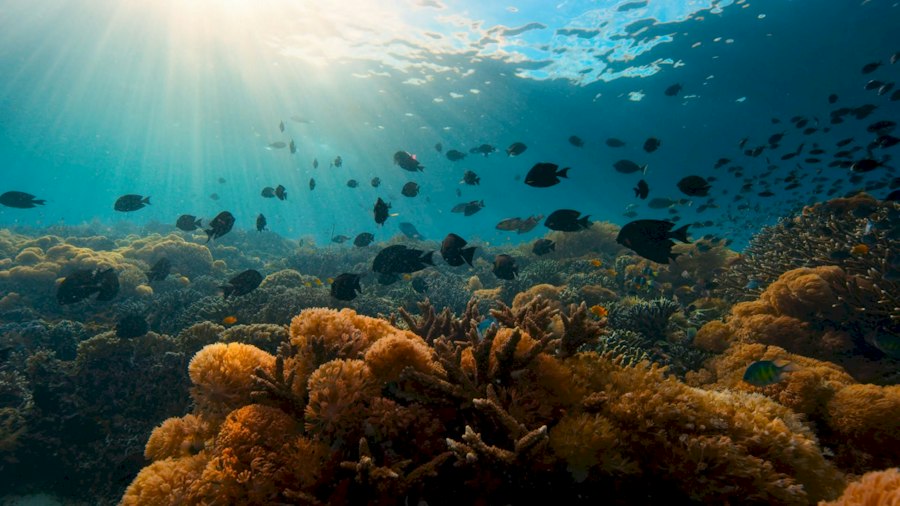
Almost every dive you will log in Jordan happens inside the Aqaba Marine Reserve, the protected stretch of Red Sea coast south of Aqaba where the Gulf of Aqaba's fringing reef drops steeply into deep blue water. Knowing what the reserve is and which rules apply makes you a better guest on the reef. This guide explains the reserve's history, its boundaries, the marine life it protects, the dive sites that lie inside it and the simple code of conduct that Aqaba Dive Academy follows on every dive.
In this guide:
- What the Aqaba Marine Reserve is and how it came to be
- Where its boundaries run and how much coast it protects
- The corals, fish, turtles and seagrass recorded inside it
- Which Aqaba dive sites lie within the reserve
- The rules for divers and snorkelers
- How artificial reefs and clean-up dives support the reserve
What is the Aqaba Marine Reserve?
The Aqaba Marine Reserve is Jordan's first marine reserve and one of the country's roughly seven nature reserves. It protects the coral-rich southern section of Jordan's 27 km Red Sea coastline, together with the narrow beach strip behind it and the water above the reef.
Its story began in 1997, when the area was set aside as the Aqaba Marine Park to ease the pressure a growing port city was placing on the reef. In 2020 Jordan upgraded the park to a national marine reserve with stronger legal standing and a clearer conservation mandate. Today the Aqaba Special Economic Zone Authority (ASEZA) manages the reserve, with scientific support from the Marine Science Station run by the University of Jordan and Yarmouk University, and with help from conservation partners. Jordan has also nominated the reserve for UNESCO World Heritage recognition and is working toward that goal.
For divers, the upgrade means the reef used for first dives since the 1990s now sits inside a marine protected area in Jordan that is monitored, patrolled and studied.
Where is the reserve and how much coast does it protect?
The reserve covers about 7 km of the 27 km coastline, south of Aqaba city, along the stretch most divers know as South Beach, between the port area and the southern resort zone. From the shoreline it extends roughly 350 m seaward and about 50 m landward, which places the fringing reef, the drop-off and the beach entries inside the protected area. Its total surface is roughly 2.5–2.8 km².
That sounds small, and it is, which is why the rules matter. Because the Gulf of Aqaba sits at the southern end of the Dead Sea Transform fault, the reef falls away steeply within a short swim of the beach, and nearly everything you dive here, from the Tank to the deep walls, lies within or beside this narrow protected strip.
What lives inside the Aqaba Marine Reserve?
Surveys in the reserve have recorded around 157 species of hard coral and about 500 fish species, from clouds of orange anthias to groupers, fusiliers, moray eels and lionfish. Three species of seagrass grow between 0.5 m and 40 m deep, forming meadows that feed turtles and shelter juvenile fish. Three sea-turtle species have been recorded, including the hawksbill that divers regularly meet on the slopes of King Abdullah Reef and the Japanese Garden.
Look closer and the numbers keep growing: two giant clam species, around 72 sponge species and roughly 645 mollusc species, nudibranchs included. Bottlenose dolphins pass through the gulf, whale sharks and sailfish are seen occasionally in summer, and seabirds use the shoreline. For a closer look at the corals themselves, read our guide to Aqaba's coral reefs and responsible diving.
Which Aqaba dive sites are inside the reserve?
Most of Aqaba's best-known dive sites lie inside the reserve, so a typical dive day takes place entirely within protected water. The classics include:
- Japanese Garden – the gently sloping coral garden used for first dives and Open Water training.
- Seven Sisters – seven shallow coral pinnacles busy with cleaning stations and glassfish.
- King Abdullah Reef – the house reef where turtles graze and where regular clean-ups and monitoring take place.
- Cedar Pride wreck – the freighter scuttled in 1985 that has become a reef in its own right.
- Underwater Military Museum – more than 19 military vehicles placed on the sand in 2019.
- The Tank (M42) and the C-130 Hercules – two shallow artificial reefs that snorkelers can see from the surface.
Our complete guide to scuba diving in Aqaba sorts all 23 sites by level and access.
Diving rules in the Aqaba Marine Reserve
The diving rules in Aqaba's reserve are the standard Aqaba Marine Park regulations, and your guide will repeat them in every briefing. They apply to divers and snorkelers alike:
- Do not touch, stand on or collect coral, shells or any marine organism, living or dead.
- No gloves. Bare hands are a constant reminder to keep your hands off the reef.
- No fishing or spearfishing anywhere in the reserve.
- Boats tie to the fixed mooring buoys; anchoring on the reef is not permitted.
- Do not feed, chase or handle marine life, turtles included.
- Take all litter back to shore; nothing goes overboard.
- Enter and exit the water only at the designated entry points.
- Dive within your certification limits and follow your dive center's briefing.
Two habits make all of the above easier. First, master neutral buoyancy so you hover instead of grabbing; a PADI specialty such as Peak Performance Buoyancy pays for itself on the first dive. Second, use reef-safe sunscreen or cover up with a rash guard, because chemical sunscreens wash off into the shallows where young corals settle. Our scuba diving safety guide for Aqaba covers the rest of the briefing.
How artificial reefs and clean-up dives support the reserve
Aqaba's artificial reefs are a conservation tool as much as an attraction. The Cedar Pride (1985), the Tank (1999), the C-130 Hercules (2017), the TriStar (2019) and the Underwater Military Museum (2019) were all cleaned of pollutants and placed on sand, away from living coral. Each one spreads divers across more sites, takes pressure off the natural reef and adds hard surfaces where corals, sponges and fish can settle. Forty years on, the Cedar Pride is proof that the approach works.
Divers contribute directly too. Aqaba Dive Academy partners with the Aqaba Society for Environmental Sustainability (A.S.E.S.) on clean-up dives and reef-care initiatives, removing fishing line, plastics and other debris from sites such as King Abdullah Reef. You can read about this partnership in our article on preserving sea life with A.S.E.S.. Guests are welcome to join; just ask when you book.
Book your reserve dives with Aqaba Dive Academy
Aqaba Dive Academy is a PADI 5-Star and CMAS dive center on South Beach, a few steps from the reserve's main entry points. We dive in small guided groups, include free transport from anywhere in Aqaba with every booking, and give you free underwater photos of your dive. Guided dives start from $30, and full equipment is available. Book online or message us on WhatsApp at +962 79 264 5333 and we will plan a day inside the reserve around your level.
FAQ
When did the Aqaba Marine Reserve become a reserve?
The area was first protected as the Aqaba Marine Park in 1997 and was declared Jordan's first national marine reserve in 2020. It is managed by ASEZA and has been nominated for UNESCO World Heritage recognition.
How big is the Aqaba Marine Reserve?
It covers about 7 km of Jordan's 27 km coastline south of Aqaba, extending roughly 350 m out to sea and 50 m inland, for a total area of about 2.5–2.8 km².
Can I snorkel in the Aqaba Marine Reserve?
Yes. Snorkeling is allowed from the designated entry points, and the same rules apply: no touching, no gloves, no feeding and no collecting. The Tank, the Hercules and the Japanese Garden are the easiest sites for snorkelers.
Why are gloves banned in the reserve?
Gloves make it tempting to hold on to the reef. Without them, divers keep their hands to themselves and rely on buoyancy instead, which protects the coral and spares the diver a fire-coral sting.
How can divers help protect the reserve?
Hover rather than hold, use mooring buoys, carry your litter out, choose reef-safe sunscreen and join one of our clean-up dives with A.S.E.S.
Ready to dive? Book with Aqaba Dive Academy or call +962 79 264 5333.
Book now