
Paradise Dive Site in Aqaba: A Deep Wall and Cave Dive for Technical Divers
Dive Sites
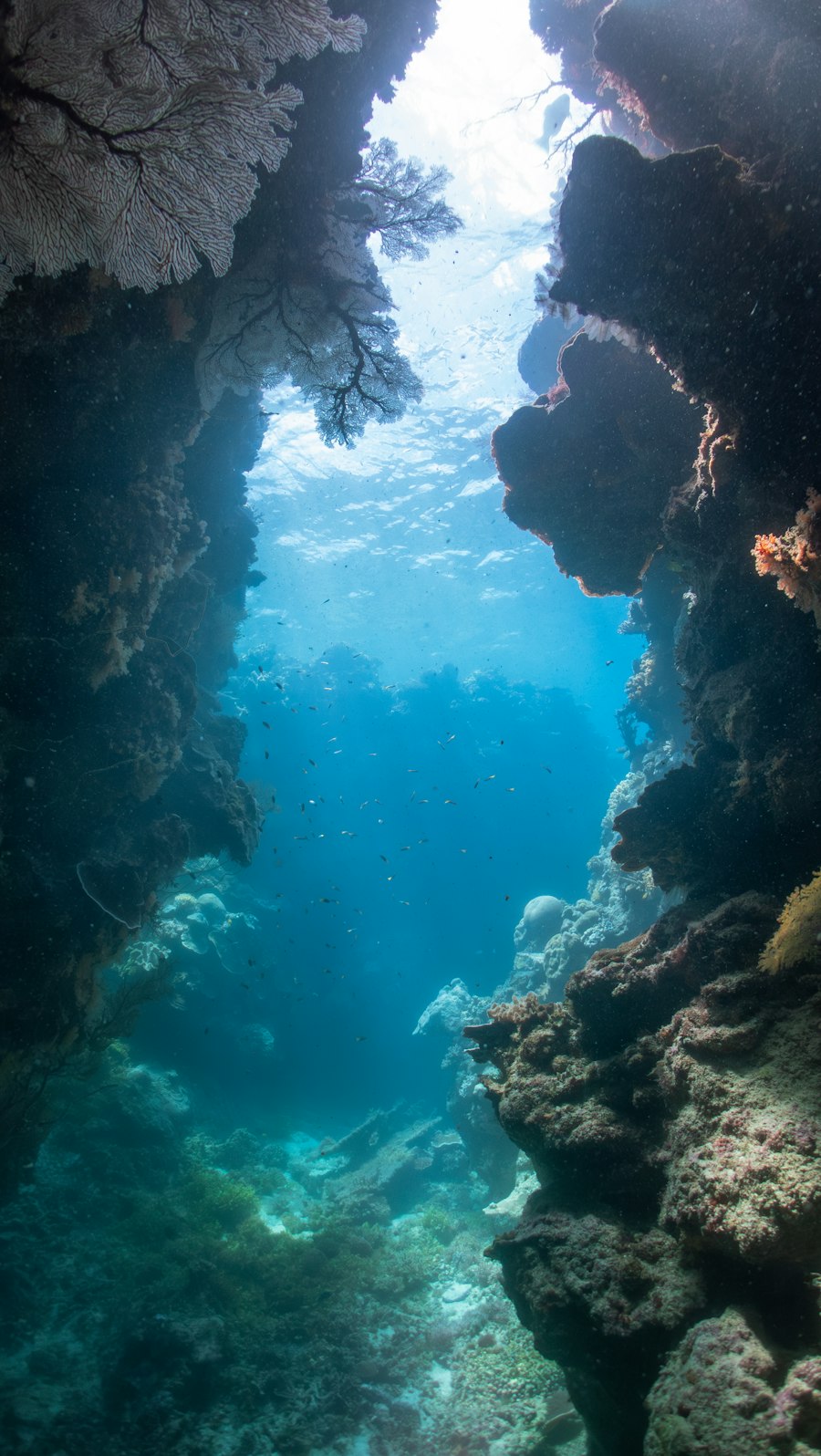
Not every site on Jordan's Red Sea coast is meant for every diver, and the Paradise dive site in Aqaba is the clearest example. It is a deep wall-and-cave dive for technically certified divers: steep reef walls, drop-offs that fall into the blue, a swim-through cave, and currents that must be built into the plan. This guide explains what makes Paradise technical, how the wall and cave are dived, the marine life on both, who may dive it, the training route from recreational to technical, and how Aqaba Dive Academy organises the trip from South Beach.
| Quick facts | |
|---|---|
| Depth | Deep; a technical profile planned per team, with no recreational depth published |
| Level | Technical certification or very extensive experience; guided, with full gas planning |
| Access | Boat only |
| Dive type | Wall and cave: steep reef walls, drop-offs, a swim-through cave, currents |
| Highlights | Gorgonians and soft corals on the wall, glassfish and crustaceans in the cave, schooling fish and pelagics in the blue |
| Best for | Technical divers, deep-wall specialists, experienced photographers with lights |
| Nearby sites | Power Station, New Canyon, Yellowstone Reef, Cedar Pride |
What makes Paradise a technical dive site?
Paradise combines four things that an experienced recreational diver might handle one at a time, but which together push the dive past recreational limits. The site is deep. Its walls are steep and end in drop-offs, so there is no bottom to settle on and no natural stopping point. The cave is an overhead environment, however short the swim-through. And the currents that sweep the wall have to be factored into every stage, from descent to the final stop.
That is why the site page gives no recreational depth for Paradise, and why we quote none here. The profile is set per team according to the certifications held, the gas carried and the plan agreed on the boat. In practice that means a technical dive: planned decompression stops, a redundant gas supply in twin cylinders or sidemount, decompression gas where the plan calls for it, and a written run-time that every member of the team follows.
The wall, the drop-offs and the swim-through cave
The dive begins on the wall. From the boat, the team descends along the reef face, which falls steeply and in places breaks into vertical drop-offs. The current usually dictates direction: you move with it along the wall, reef on one side and open blue on the other, while the guide controls depth and pace.
The cave is a swim-through, which means it has an entrance and an exit, and daylight is visible ahead for much of the passage. It is still an overhead environment. For the length of the swim-through there is no direct route to the surface, lights are mandatory, fin technique must not stir sediment, and the team passes through in an agreed order. Beyond the cave the wall continues, and the ascent is made along it, with decompression stops carried out in moving water. A surface marker buoy and reel are essential so the boat can track the team as it drifts through the stops.
What divers remember afterwards is the light: shafts of sun entering the cave mouth, the blue of the drop-off seen from the shade, and the reef face lit from above as you rise through your stops.
What will you see at Paradise?
The wall belongs to the filter feeders. Soft corals, gorgonian sea fans and sponges do well here because the current brings a steady supply of food, and the fans grow largest where the flow is strongest. Schooling fish hang off the wall in the current, groupers hold position in cracks and under ledges, and the drop-offs are where pelagic fish can appear out of the blue.
Inside the cave and under the overhangs the picture changes to small and close. Glassfish pack the shaded spaces, and crustaceans cling to the walls and ceiling where your torch picks out their eyes. Photographers with wide-angle lenses and strong lights do well here, once the technical side of the dive has become routine.
Who can dive Paradise, and how do you get there?
Paradise is for technically certified or very highly experienced divers, always with a guide and always with a gas plan agreed before the boat leaves. In practice the team will ask for:
- A technical certification covering planned decompression from a recognised agency such as PADI TecRec or CMAS, or an equivalent record of deep-diving experience.
- Recent logged deep dives and demonstrated comfort in current.
- Familiarity with overhead environments, because of the cave.
- Suitable equipment: redundant gas, primary and backup lights, surface marker buoy and reel, and a computer set for the planned gases.
From recreational to technical: the training path
If Paradise is your goal, the route starts with the PADI Advanced Open Water course, which certifies you to 30 m and introduces deep diving. The PADI Deep Diver specialty then extends your limit to 40 m over four dives and teaches gas planning in earnest. PADI Rescue Diver builds the self-reliance that technical training assumes. From there, training in decompression procedures is the final step; ask the team about options via the courses page, and read our overview of advanced diving courses in Aqaba for the full ladder.
Safety backup matters on a dive like this. Boats carry emergency oxygen, Aqaba has a hyperbaric chamber at Princess Haya Bint Al Hussein Hospital, and dive insurance such as DAN is strongly recommended. Our scuba diving safety guide covers the signs of decompression sickness and what to do.
Responsible technical diving in the Aqaba Marine Reserve
Paradise lies along the coast protected by the Aqaba Marine Reserve, and technical divers carry a particular responsibility there: more equipment, longer stops and a cave passage all multiply the chances of contact with the reef. Clip off every hose and light, hold your trim through the swim-through, and never use the cave walls or the gorgonians as handholds in current. The reserve's other rules apply too: no gloves, no collecting, no feeding, mooring buoys instead of anchors, and reef-safe sunscreen. Our guide to Aqaba's coral reefs and responsible diving explains why the gulf's corals are studied worldwide.
Nearby dive sites to combine with Paradise
Technical teams often warm up on the Power Station wall, an Advanced-level drift dive from 5 to 50 m, before a Paradise day. The New Canyon dive site, believed to have been opened by the 1983 earthquake, is another Advanced option nearby. The closest match in character is Yellowstone Reef, a second technical site with massive deep pinnacles, and the Cedar Pride wreck makes an easy recreational dive on another day.
Book this dive with Aqaba Dive Academy
Technical dives at Paradise are arranged individually: send us your certifications and recent dive history, and our PADI 5-Star and CMAS instructors will plan the gases, the profile and the boat departure from South Beach with you. Teams are kept small, transport from anywhere in Aqaba is free with your booking, and photos of your dive are included at no cost. Recreational guided dives start from $30. See the Paradise dive site page, use our online booking form, or WhatsApp +962 79 264 5333 to start planning.
FAQ
How deep is the Paradise dive site in Aqaba?
Paradise is a deep technical site, and no single recreational depth is published for it. The profile is planned per team according to certification, gas and decompression plan.
Can Advanced Open Water divers dive Paradise?
No. The combination of depth, drop-offs, a cave and current puts the site beyond recreational limits. Advanced divers can dive the nearby Power Station wall and New Canyon instead.
Do I need a cave certification for the swim-through?
The cave is a swim-through rather than a cave system, but it is still an overhead environment. Technical certification plus overhead experience is expected, and the team assesses every diver before the dive.
Is Paradise a boat dive?
Yes, boat only. The team departs from South Beach, and the boat follows the divers during the drift and the decompression stops.
Is there a best season to dive Paradise?
Diving runs all year. Visibility is commonly 15–40 m, and the water is about 21 °C in winter and 27 °C in summer. Long stops feel colder, so technical divers often wear thicker exposure protection than recreational divers in the same month.
Ready to dive? Book with Aqaba Dive Academy or call +962 79 264 5333.
Book now