
Yellowstone Reef in Aqaba: Deep Coral Pinnacles for Technical Divers
Dive Sites
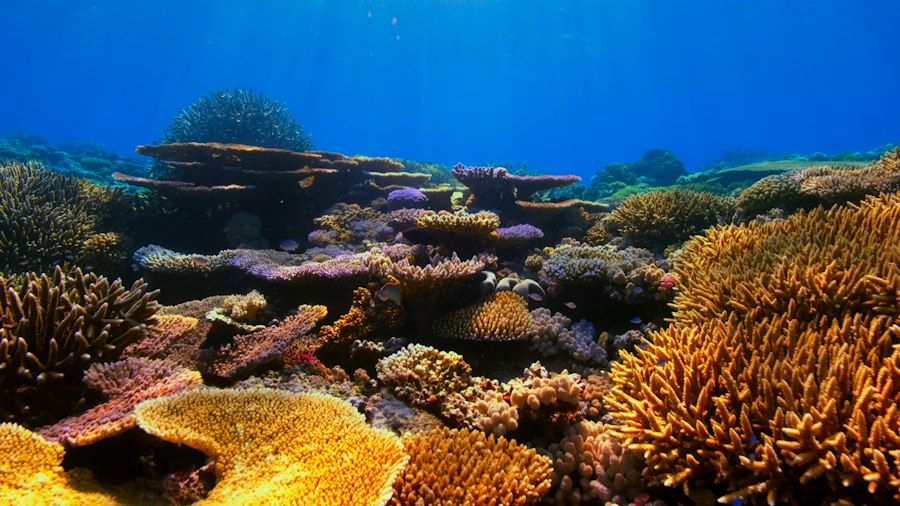
Some reefs stay in near-perfect condition for a simple reason: almost nobody can reach them. Yellowstone Reef in Aqaba is that kind of place, a group of massive coral pinnacles standing at depths beyond recreational limits, dived only by technically trained divers from a boat. Depth has acted as its guardian, and the coral, the sponges and the large fish that live on it show what a Red Sea reef looks like without daily traffic. This guide covers why the site is technical, how the dive runs, what lives on the pinnacles, who can dive it, the training path from Advanced to technical, and how Aqaba Dive Academy plans the trip from South Beach in Jordan.
| Quick facts | |
|---|---|
| Depth | Deep, beyond recreational limits; the profile is set per team and no recreational figure applies |
| Level | Technical certification; highly experienced divers only, with a guide and full gas planning |
| Access | Boat only |
| Dive type | Deep reef: massive coral pinnacles rising from the seabed |
| Highlights | Pristine hard and soft coral cover, sponges, large groupers and snapper, pelagics in the blue |
| Best for | Technical divers, deep-reef photographers, divers completing a technical course |
| Nearby sites | Power Station, New Canyon, Paradise, Cedar Pride |
Why Yellowstone Reef is reserved for technical divers
The pinnacles of Yellowstone Reef stand below the depth that recreational training allows. We do not print a figure because none applies to a recreational diver: the dive is planned as a decompression dive, with maximum depth, bottom time and stops calculated for each team. That rules out Open Water, Advanced and even Deep specialty divers, whose limit ends at 40 m, and it is the reason the reef looks the way it does.
Technical diving, in short, means carrying more gas than you expect to need, in twin cylinders or sidemount, so that a failure never leaves you without something to breathe; carrying a separate decompression gas when the plan calls for it; following a written run-time schedule; and ascending through staged stops rather than a single safety stop. Add the narcosis and cold that come with depth, and it becomes clear why tec diving in Aqaba is a team activity with a guide, not a solo adventure. Access is by boat only, and the approach is over deep water rather than a shore slope.
What does a dive on Yellowstone Reef look like?
The descent is the first difference from a recreational dive. The team drops together into blue water, following the guide and a reference line where one is used, and the pinnacles appear below as dark masses that only take on color when your lights reach them. Bottom time is short and fixed in advance, so the dive is spent circling the pinnacles rather than wandering between them.
Then the long part begins. The team ascends on schedule, switches to decompression gas if the plan includes one, and hangs in the blue through a series of stops while the boat holds position above the surface marker. On a good day the stops are the quiet highlight: pelagic fish pass beneath you, the reef recedes into blue, and the sun returns as you shallow. Visibility in the gulf is commonly 15–40 m, which makes those long stops far more pleasant than they are in colder seas.
What will you see at Yellowstone Reef?
The reef's defining feature is cover. Because so few divers visit, the pinnacles carry an unbroken coat of hard and soft corals, with sponges filling every gap and nothing broken or scarred by fins. Large groupers, grown big in the absence of disturbance, hold station at the base of the pinnacles, and snapper gather in schools on the up-current side.
The blue is the other half of the picture. Pelagic fish cruise past the pinnacles at depth, and the deeper you look, the more the open water feels like the edge of something. Light is limited, so a strong torch is not optional: without one the sponges and soft corals are shades of blue-grey; with one they are red, orange and yellow.
Who can dive Yellowstone Reef, and how do you get there?
Yellowstone Reef is for technically certified, highly experienced divers only, diving with a guide under a gas plan agreed before departure. Expect the team to ask for:
- A technical certification covering planned decompression from a recognised agency such as PADI TecRec or CMAS.
- A logbook showing recent deep dives at comparable depths.
- Full technical equipment: redundant gas, decompression gas as planned, primary and backup lights, surface marker buoy and reel, and a computer set for the gases carried.
- A medical statement and dive insurance such as DAN, plus a flight schedule that allows at least 18 hours after multiple dives.
The training path from Advanced Open Water to technical diving
No one starts at Yellowstone Reef. The ladder begins with the PADI Advanced Open Water course, five adventure dives including Deep and Navigation that certify you to 30 m. The PADI Deep Diver specialty adds four dives to 40 m and real gas planning, and PADI Rescue Diver builds the self-sufficiency that every technical instructor expects. Technical training in decompression procedures comes last; ask the team about current options on the courses page, and see our guide to advanced diving courses in Aqaba for timelines and prerequisites.
Aqaba is well placed for deep training: boats carry emergency oxygen, and the city has a hyperbaric chamber at Princess Haya Bint Al Hussein Hospital. Our scuba diving safety guide covers decompression sickness, its signs and first response.
Protecting a reef that depth has kept pristine
Yellowstone Reef lies on the stretch of coast protected by the Aqaba Marine Reserve, and its condition is a measure of what the reserve is trying to achieve everywhere. The few divers who reach it are its only visitors, so their conduct decides whether it stays this way. Keep off the coral entirely, hold neutral buoyancy during every stop, secure stage cylinders and lights so nothing drags, and leave the groupers to their patrols. Boats use mooring buoys rather than anchors, and nothing is taken from the reef. Research suggests the gulf's corals tolerate heat unusually well, which makes an undamaged deep reef like this one valuable to science as well as to divers. See our guide to Aqaba's coral reefs and responsible diving.
Nearby dive sites to combine with Yellowstone Reef
Technical teams rarely do two deep dives in one day, so pairings are usually across days. Paradise, with its wall, drop-offs and swim-through cave, is the natural companion for a technical trip. For a recreational day, the Power Station wall offers a 5–50 m drift for Advanced divers, the New Canyon dive site adds an earthquake-formed canyon, and the Cedar Pride wreck remains the easiest way to finish a week in Aqaba.
Book this dive with Aqaba Dive Academy
A Yellowstone Reef trip is built around your team: tell us your certifications, recent dives and preferred gases, and our PADI 5-Star and CMAS instructors will put together the plan and the boat departure from South Beach. Groups stay small, pick-up from anywhere in Aqaba is free with the booking, and we photograph your dive without charge. Recreational guided dives are available from $30. Read the Yellowstone Reef dive site page, request a booking online, or WhatsApp +962 79 264 5333 to talk through the plan.
FAQ
How deep is Yellowstone Reef in Aqaba?
It lies beyond recreational depth limits, and no recreational figure is published. The maximum depth, bottom time and decompression stops are planned per team by technically certified divers and their guide.
Can recreational divers dive Yellowstone Reef?
No. The site requires technical certification and planned decompression. Advanced divers have the Power Station wall and New Canyon close by as alternatives.
Why is Yellowstone Reef described as pristine?
Because its depth keeps casual divers away, the pinnacles carry unbroken coral and sponge cover and support large groupers and snapper that are rarely disturbed.
Is Yellowstone Reef a boat dive?
Yes, boat only. The team departs from South Beach, descends into open water above the pinnacles, and the boat holds station over the surface marker during the stops.
What training do I need to dive Yellowstone Reef?
A technical certification in decompression diving, built on Advanced Open Water, the Deep specialty and Rescue Diver. Aqaba Dive Academy can advise on the path and the dives needed in between.
Ready to dive? Book with Aqaba Dive Academy or call +962 79 264 5333.
Book now